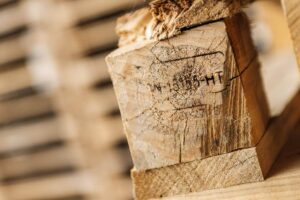
The wooden pallet proves to be a crucial part of our modern day life, from logistics and international trade to agriculture, manufacturing, and retail. Every single day, billions of tons of cargo move across oceans, highways, and rail networks, and a big share of that cargo relies on a wooden pallet to keep it moving. Without it, the transport industry would literally come to a stand-still.
The first “pallet”
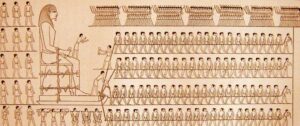
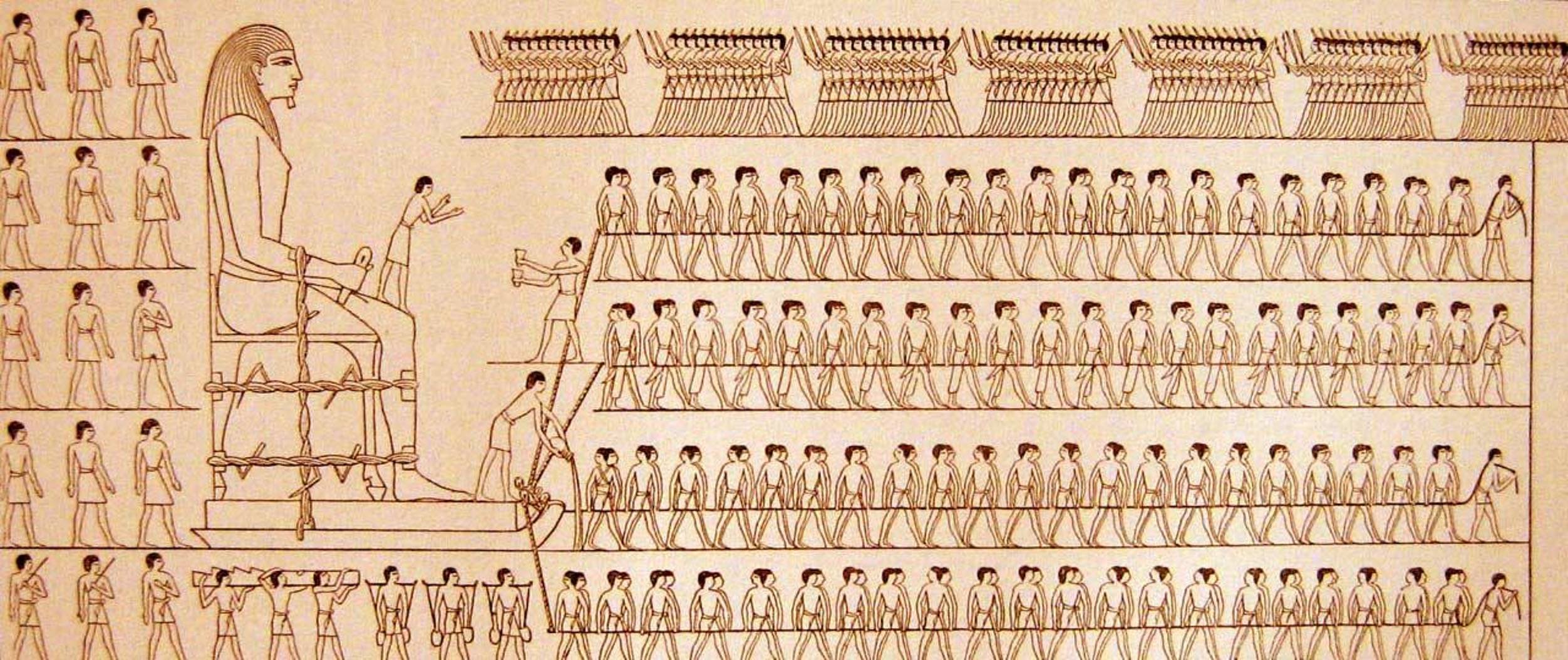
That logistics machine started with something simple. The earliest ancestor of the pallet was the ‘skid’, a simple wooden platform without a bottom deck, already in use as far back as ancient times. The Egyptians used wooden skids to haul multi-ton stone blocks for pyramids and statues, and the Vikings used them to drag heavy longships across land to move heavy objects with somewhat less effort than carrying them by hand. The skid did its job and was essentially unchanged for centuries. What finally pushed it to evolve was not a better idea about wood, but a new machine: the forklift, invented in the early 20th century, which gave engineers a reason to rethink the platform underneath it.
The evolution towards the pallet as we now know it
That rethink arrived in 1925, when Howard T. Hallowell patented what he called a “lift truck platform,” a design that attached wooden boards to two stringers. It was a small change on paper, but it marked the first true pallet as we would recognise it today. A few years later, in the 1930s, George G. Raymond went further still with his “two-sided pallet,” adding both a top and a bottom platform. The result was a sturdier, more stackable structure, and stackability, it would turn out, was the feature that mattered most.
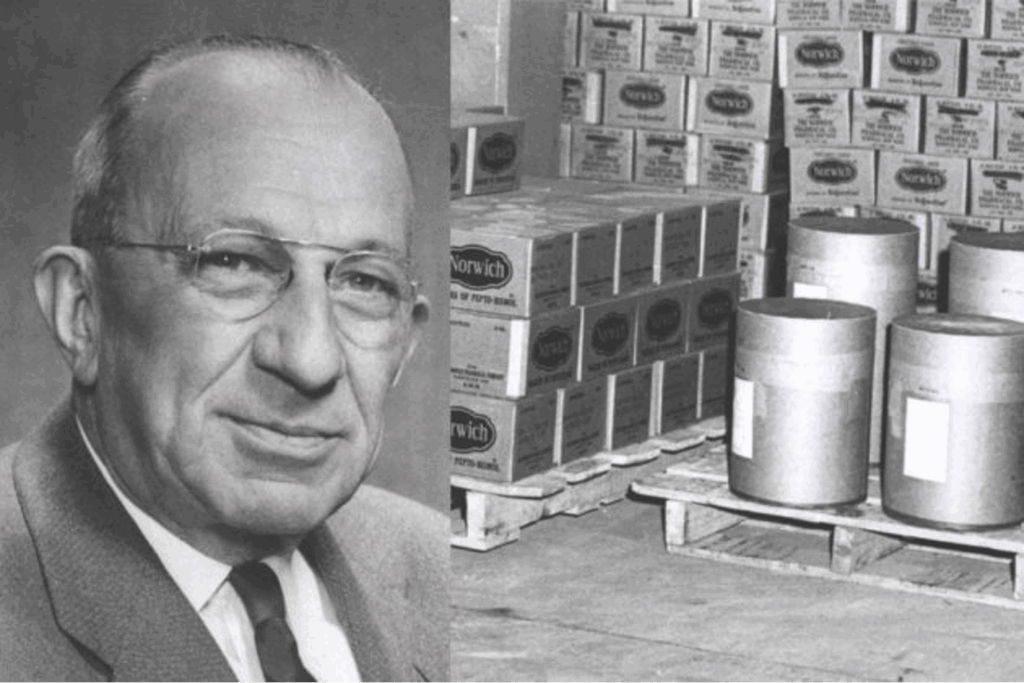
Howard T. Hallowel and the” lift truck platform”
Three questions worth asking before you believe any comparison
It was war, not commerce, that forced the pallet’s next leap forward. World War II demanded that vast quantities of goods and materials move efficiently across continents, and existing designs were not built for that kind of pressure. Out of this necessity came the four-way wooden pallet, liftable from any side, along with early moves toward standardising pallet sizes so that different vehicles and depots could all handle the same load. In the years right after the war, further patents introduced disposable wooden pallets and designs that, for the first time, closely resembled the pallets still used today. A wartime problem had produced a peacetime standard.
Normalization, implementation and standardization
That standard then spread with remarkable speed. Through the post-war decades, the wooden pallet became the first choice in transport and logistics, and its adoption did not stop at the pallet itself: it reshaped how trucks were built, how warehouses were laid out, and how stores organised their backrooms.
The 1950s and 60s brought a further wave of standardisation, driven by the need for interoperability across borders. In Europe, railway companies developed the Euro pallet to streamline the loading and unloading of freight wagons across the continent’s rail network. In the United States, the Grocery Manufacturer Association introduced the GMA pallet to bring the same order to the distribution of consumer goods. These standard sizes remain essential to global trade today.
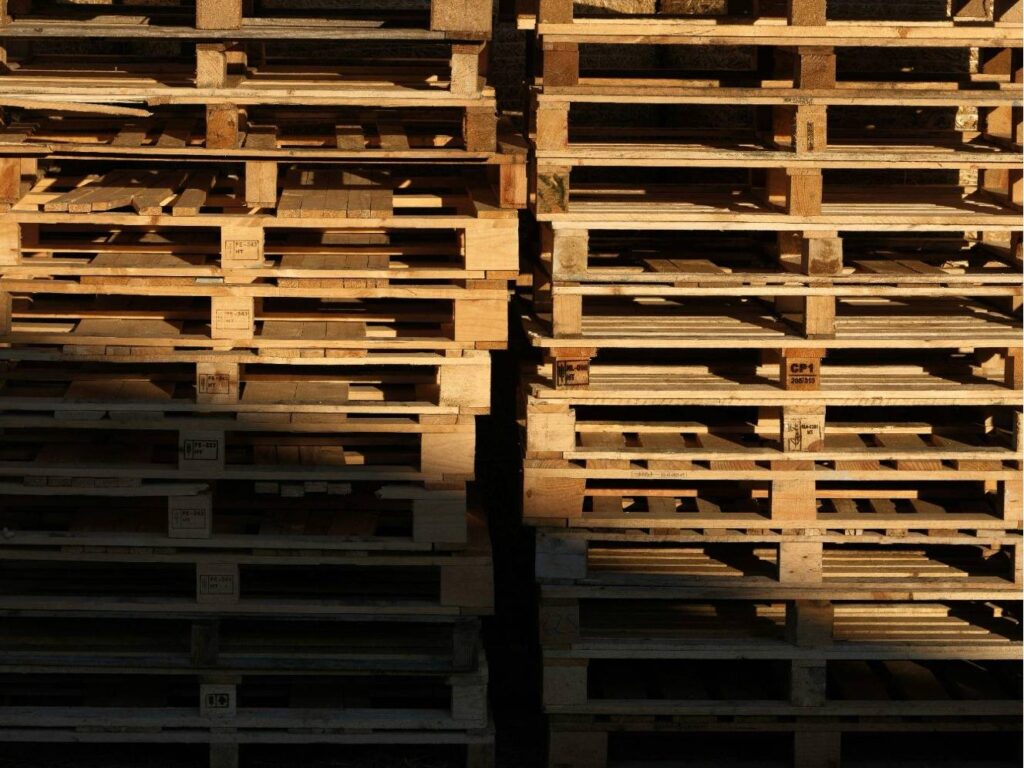
What is interesting is how little the pallet’s basic design has changed since. The modern wooden pallet is still, at its core, built on ideas that are almost 70 years old. The real progress since then has happened around the design rather than in it: better wood treatment, more precise manufacturing, and a steadily deepening commitment to sustainability. Today, nearly 95% of pallets in circulation are reused or repaired, sustained by a well-established network of repair facilities and increasingly automated sorting systems. When a pallet does finally reach the end of its working life, it doesn’t go to waste; the wood is turned into chips that serve as raw material elsewhere. It is a closed loop in practice, not just in principle, and one that predates the current vocabulary of the circular economy by decades.
Reliable and indispensable
Global supply chains keep growing longer and more complex, yet wooden pallets remain as available and as relied upon as ever. Their capacity to store carbon over a working life adds a further, quieter benefit to a material that was never chosen for its environmental credentials but has turned out to deserve them anyway.
The history of the wooden pallet is, in the end, a history of quiet adaptation: from a simple ancient skid to an omnipresent, sustainable tool of modern trade. It hasn’t been the most glamorous. It has, however, for nearly a century, been indispensable.